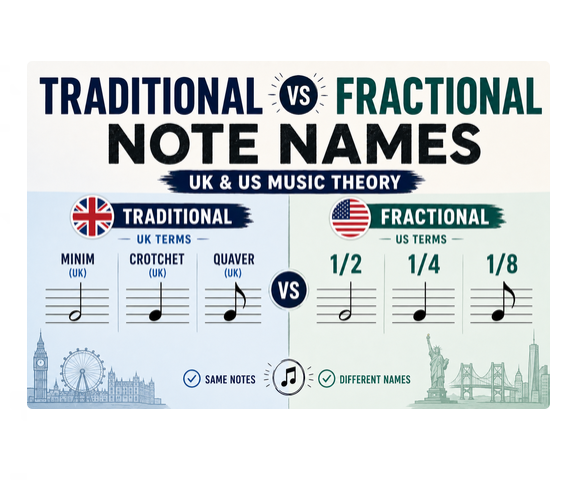
UK and US Music Theory Terminology: Note Values Explained
UK and US Note Value Terminology Explained
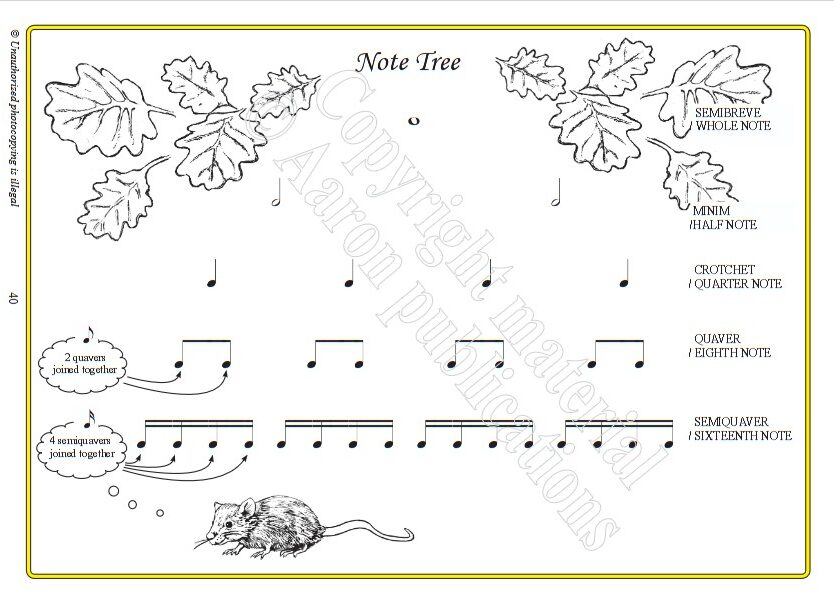
Music theory terminology differs between English-speaking countries, particularly in the naming of note values.
The notation itself is the same. The principal difference is the terminology used to describe it.
In the United States, note values are commonly described using fractional names:
- Whole note
- Half note
- Quarter note
- Eighth note
- Sixteenth note
- Thirty-second note
In the United Kingdom, note values are commonly described using traditional names:
- Semibreve
- Minim
- Crotchet
- Quaver
- Semiquaver
- Demisemiquaver
UK and US Note Value Names
| US / Fractional Terminology | UK / Traditional Terminology |
|---|---|
| Whole note | Semibreve |
| Half note | Minim |
| Quarter note | Crotchet |
| Eighth note | Quaver |
| Sixteenth note | Semiquaver |
| Thirty-second note | Demisemiquaver |
These are different names for the same musical values.
All-In-One Music Theory Uses Both Systems
Although All-In-One Music Theory was developed in the UK, the books are designed to be accessible to students using either British or American terminology.
Both systems are taught throughout the books, rather than simply being mentioned in a terminology table.
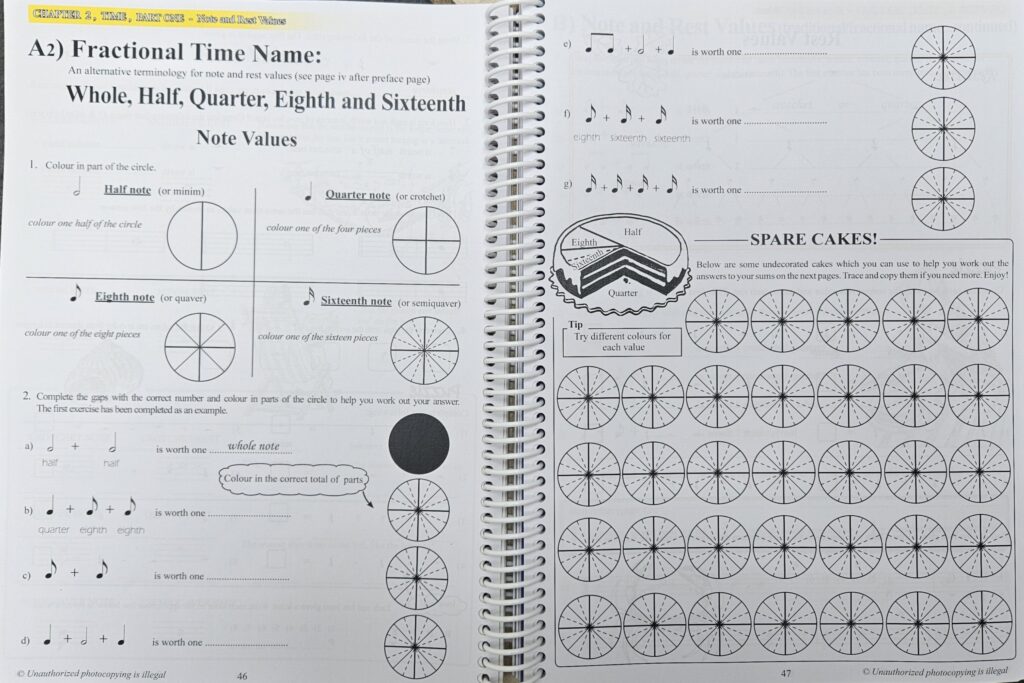
For example, in Chapter 2: Time, students encounter exercises using both traditional British names and American fractional names.
The same principle applies to rests.
For example:
- Crotchet rest = quarter rest
- Quaver rest = eighth rest
- Semiquaver rest = sixteenth rest

Why Teach Both Terminologies?
Understanding both systems is particularly useful for students who may encounter music education in different countries, working with different teachers, books, examination systems or musical resources.
An American student may learn about a quarter note, while a British teacher may call exactly the same symbol a crotchet.
A British student may learn about a semibreve, while an American teacher may refer to it as a whole note.
The terminology is different, but the musical value is the same.
Learning both systems can also help students understand the relationship between note values and time signatures. The fractional terminology makes the numerical relationships between note values particularly clear, while the traditional terminology remains an important part of British and international music education.
Other UK and US Music Theory Terminology
The differences are not limited to note values.
A table towards the front of All-In-One Music Theory explains major terminology differences in music theory and indicates where these terms are used in the book.
Other examples include:
| UK terminology | US terminology |
|---|---|
| Stave | Staff |
| Staves | Staffs |
| Bar / bar-line | Measure / bar line |
| Semitone | Half step |
| Tone | Whole step |
Where appropriate, All-In-One Music Theory uses footnotes and explanations to help students recognise these differences.
The aim is not to make students choose one terminology over another, but to help them understand the musical concepts and recognise the terminology used by different teachers and resources.
An American Music Teacher Asked About All-In-One Music Theory
An American music teacher once contacted me after seeing a sample page from the All-In-One Music Theory book.
Her question was whether the books would be suitable for American students, since American music education commonly uses fractional note-value names rather than the traditional British terminology.
She had noticed that a sample page from the book presents both UK and US terms side by side.
The answer is simple: students using All-In-One Music Theory can learn both systems.
In Chapter 2: Time, students encounter several pages of exercises using both terminologies.
A1 paper is titled:
‘Traditional Name: Semibreve, Minim, Crotchet, Quaver and Semiquaver’
A2 paper is titled:
‘Fractional Time Name: Whole, Half, Quarter, Eighth and Sixteenth’
In Paper B, students may answer questions using either system. These papers are then followed by a section on Time Signatures, which links directly to this topic.
The books also introduce other differences in English-language music terminology. For example, the Foreword includes a table of major terminology differences, while footnotes explain terms such as stave and staff where appropriate.
Want to Know More About Using All-In-One Music Theory in the USA?
All-In-One Music Theory was developed around the UK examination system, but the books use both British and American terminology and can be useful to students studying music theory outside the UK.
For more information about the books, UK examination grades and their suitability for American and international students, see:
Is All-In-One Music Theory Suitable for American Students?
Summary
The main UK and US note-value names are:
- Semibreve = Whole note
- Minim = Half note
- Crotchet = Quarter note
- Quaver = Eighth note
- Semiquaver = Sixteenth note
- Demisemiquaver = Thirty-second note
The same approach is used for rests and, where relevant, other differences in British and American terminology.
The musical notation remains the same; it is the terminology that differs.
Whether a student is studying in the UK, the USA, Canada or elsewhere, understanding both systems can make it easier to work with different teachers, books, examination systems and musical resources.