Is All-In-One Music Theory Suitable for American Students?
Yes. Although the All-In-One Music Theory books are not widely known in the United States, they have proved popular among the American students who have discovered them. The books were originally developed in the UK and are primarily based around the UK music examination system. However, one feature that makes them particularly accessible internationally is that they explain and use both British and American music-theory terminology.
The books cover the requirements of ABRSM, Trinity College London and VCM at the relevant grades, while also providing some optional material beyond the scope of Grade 5. This additional material helps students develop a broader understanding of music theory and provides a useful introduction to topics that they will encounter at Grade 6.
The books are therefore not limited to students preparing for a particular UK examination and can also be used by students studying music theory more generally, including students in the United States.
Using All-In-One Music Theory in the USA
British versus American Music-Theory Terminology
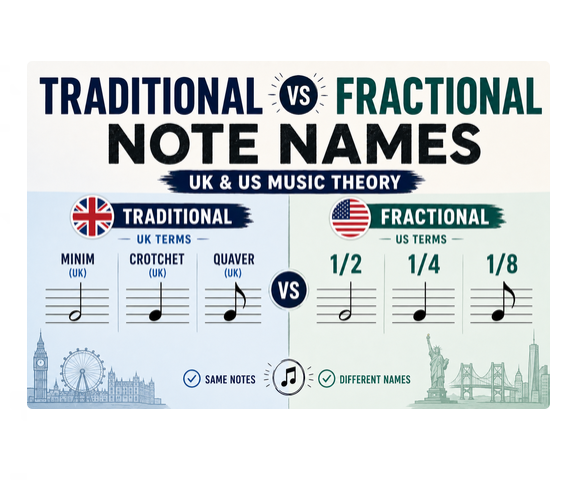
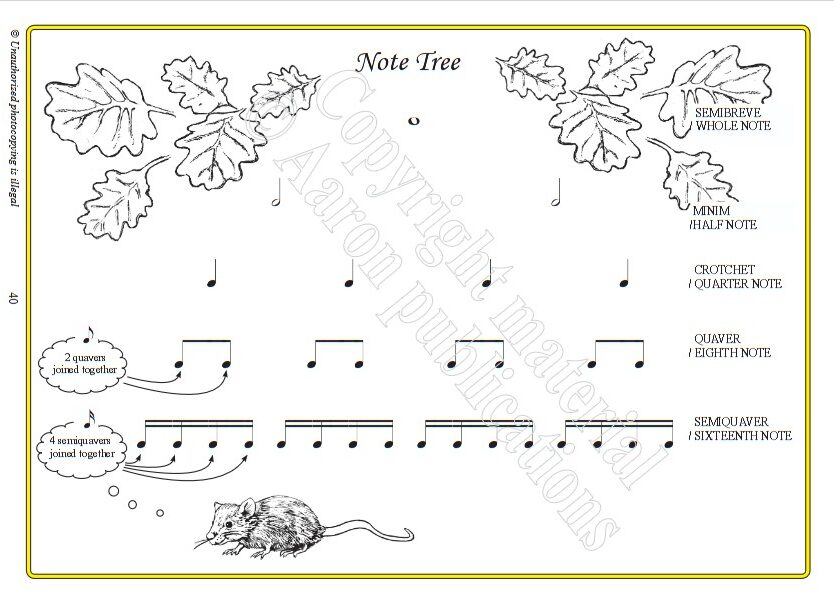
One of the most noticeable differences for American students is terminology. For example, the British term crotchet corresponds to the American term quarter note, while quaver corresponds to eighth note.
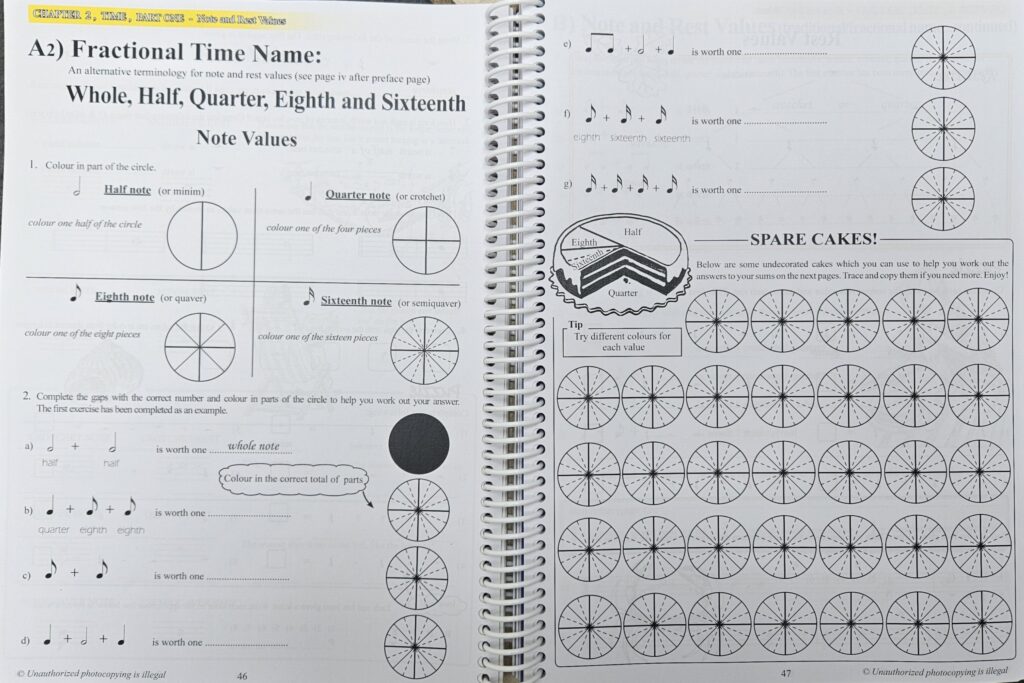
All-In-One Music Theory explains both systems of terminology, so students can recognise the terms used in different books, examinations and teaching environments. The fractional terminology was deliberately introduced into the books because it makes the numerical relationships between note values and the understanding of time signatures particularly clear. At the same time, the traditional British terminology remains an important part of British and international music education.
An American Music Teacher’s Experience
“There are ‘Britishisms’ in the book, but not so many to discourage American students… Perhaps the best endorsement comes from the fact that my test subject is thriving, progressing rapidly, and enjoying the journey.”
— K. Maven, Indiana
This was particularly encouraging because one of the aims of All-In-One Music Theory has always been to make music theory understandable rather than unnecessarily dependent on terminology.
The use of American terminology alongside British terminology can help students who are accustomed to American terms while also allowing them to recognise alternative terms when using international books and resources.
👉 UK and US Music Theory Terminology: Note Values Explained
How Do UK and US Music-Theory Levels Compare?
All-In-One Music Theory was developed primarily around the requirements of the ABRSM, Trinity College London and VCM examination systems. The grade numbers used in the book titles therefore refer to the UK-style graded examination system.
American students who are not studying for ABRSM, Trinity or VCM should not assume that a UK grade is identical to a US course or examination level.
If you are preparing for a particular American examination, qualification or school music course, compare its syllabus with the contents of the relevant All-In-One book to make sure that the topics you need are covered.
👉 Compare Music Theory Syllabus Requirements for ABRSM, Trinity and VCM
What About RCM Theory?
The Royal Conservatory of Music (RCM) uses a different theory structure from ABRSM and Trinity. RCM level numbers should therefore not simply be treated as equivalent to UK grade numbers.
One useful example is the relationship between RCM Level 8 Theory and ABRSM Grade 5 Theory. RCM identifies ABRSM Grade 5 Theory as an equivalent certificate for Level 8 Theory transfer-credit purposes.
This is a transfer-credit comparison, rather than a claim that the two examinations contain identical material.
The different numbering systems illustrate why students transferring between examination systems should compare the actual topics covered, rather than relying solely on the grade or level number.
Which All-In-One Book Should an American Student Choose?
The most appropriate All-In-One Music Theory book depends on the student’s existing knowledge of music theory and the level of material they need to study.
Students studying outside the UK should consider their previous music-theory experience and the topics they already understand when choosing between the books.
The All-In-One books also include some optional material beyond the core Grade 5 syllabus. For this reason, the range of material can be described as Grade 5+ UK, with some topics helping to prepare students for Grade 6.
👉 Bridging the Gap from Grade 5 to Grade 6 Music Theory
👉 Read our guide comparing the All-In-One Music Theory books
Using All-In-One Music Theory Without a UK Examination
You do not need to be preparing for an ABRSM, Trinity or VCM examination to use All-In-One Music Theory.
The books can also be used as a structured way of learning, practising and revising music theory. Students following a school music programme, taking private music lessons or preparing for another examination system may find them useful as a supplementary theory resource.
If you are studying for a specific American music-theory course or examination, it is sensible to compare the syllabus requirements with the contents of the book you are considering.
Frequently Asked Questions
Can American students use All-In-One Music Theory?
Yes. The books were developed around UK examination syllabuses but can also be used by students studying music theory more generally, including students in the United States.
Does All-In-One Music Theory use American terminology?
Yes. The books explain and use both British and American music-theory terminology, including terms such as quarter note, half note and whole note.
Can All-In-One Music Theory be used for RCM?
The books can be used as supplementary music-theory resources, but RCM has its own syllabus and progression. Students preparing specifically for an RCM examination should compare the RCM syllabus with the contents of the relevant All-In-One book.
Is RCM Level 8 the same as ABRSM Grade 5?
RCM officially lists ABRSM Grade 5 Theory as an equivalent certificate for RCM Level 8 Theory transfer-credit purposes. This does not mean that the two examinations have identical syllabuses.
Can I use All-In-One Music Theory if I am not taking an exam?
Yes. The books can be used for structured music-theory study, revision and supplementary learning even when a student is not preparing for a particular examination.
Further Information
If you are an American or Canadian teacher or student and have questions about British and American music-theory terminology, examination systems, or which All-In-One book would be most appropriate for your studies, please use the contact form on the website.
For reviews and comments from teachers and students, please visit the Reviews page.
The All-In-One Music Theory books and additional free music-theory resources are available through the website.