Real and Tonal Sequences in Music Theory: Explained with Examples (Trinity Grade 3)
What is a sequence in music theory?
A sequence is a musical pattern that is repeated at a different pitch, usually higher or lower.

At first, this may seem like a simple exercise: identify the repeated pattern and work out how it moves. However, this basic idea is one of the building blocks that composers use to create movement, excitement, tension and musical direction.
The two types of sequences
There are two types of sequences that students encounter in music theory: real sequences and tonal sequences.
Real sequences
A real sequence repeats the pattern at exactly the same interval, so the intervals between the notes remain unchanged.
Tonal sequences
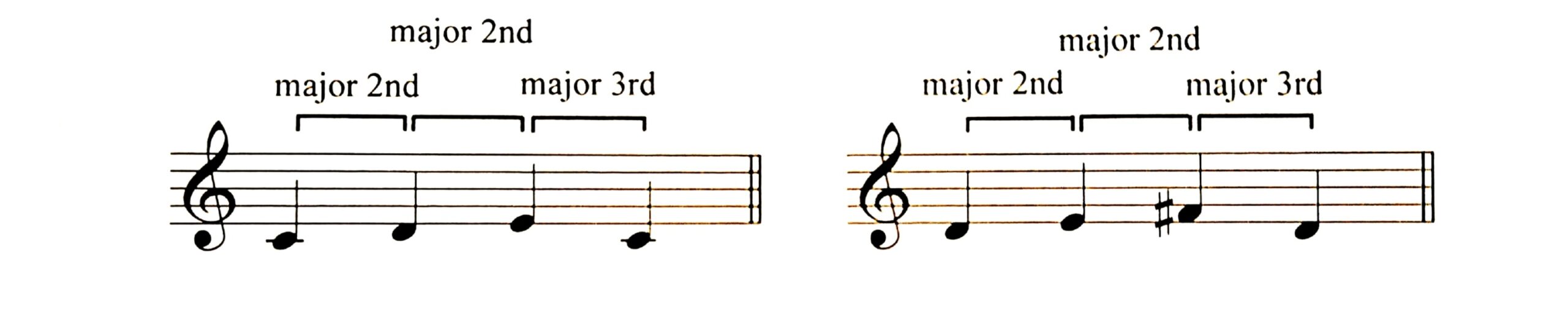
A tonal sequence repeats the pattern at a different pitch but changes some of the intervals so that the notes fit the key or harmony.

The listener can still recognise the original pattern, but the composer adjusts some notes to keep the music within the desired tonal framework.
Real and tonal sequences in Trinity College London Music Theory
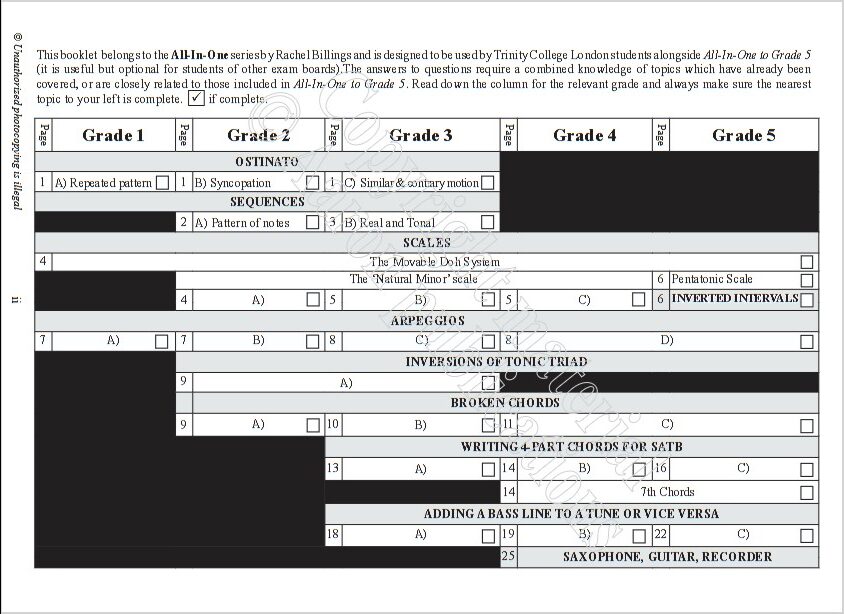
Trinity Supplement (used by Trinity students alongside All-In-One to Grade 5). Contents page showing Sequences at Grades 2 and 3.
Trinity students first encounter sequences as a musical pattern at Grade 2. At Grade 3, they develop this understanding further by learning about real and tonal sequences.
The Trinity Supplement, designed to be used alongside All-In-One to Grade 5, provides a clear explanation of this topic, with examples and exercises designed to help students understand and practise the concept.
Practise real and tonal sequences
Practice exercises on this topic can be found in the Trinity College London Music Theory Supplement – All-In-One to Grade 5.

The book explains the process step by step and includes an example exercise before the questions. Students are asked to place brackets around the sequences and label them as real or tonal.
The same idea appears in great music
The exciting thing about music theory is discovering that the ideas studied in simple exercises are also used by great composers.
A sequence does not need to be complicated to be powerful. Composers use sequences to develop musical ideas, create momentum, build tension and shape the emotional direction of a piece. At a more advanced level, sequences can also help composers move between different keys. Forward movement is created by:
☑ repeated pattern
☑ rising/falling movement
☑ harmonic progression
Additional Free Music Theory Resources
 Can you actually hear the sequences?
 Learn to recognise sequences – both real and tonal, in an analysis of Chopin’s Scherzo No. 2. Discover how simple musical idea can become part of a much larger dramatic structure.
Continue your theory journey
The All-In-One Music Theory work books are designed to make music theory clear and approachable, building strong foundations through explanations, examples and exercises.
Once students understand the basic principles, they can begin to recognise these same ideas within the music they play.
Explore the All-In-One Music Theory workbooks and Revision booklets