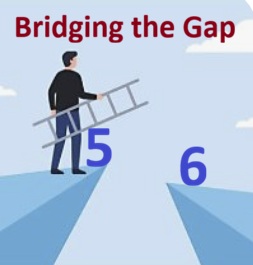
Bridging the Dreaded Gap: How to Transition from Grade 5 to Grade 6 Music Theory Smoothly
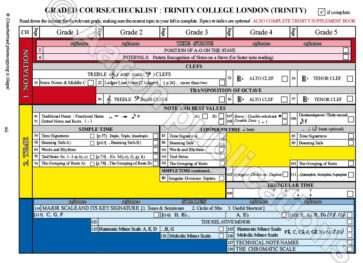
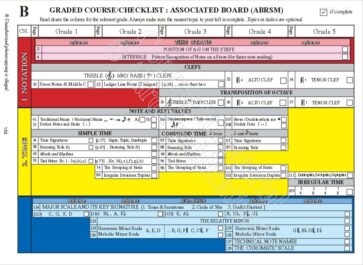

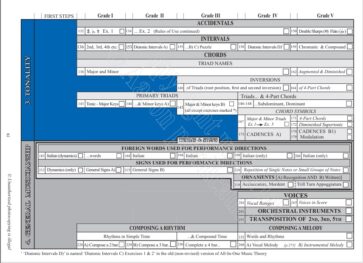
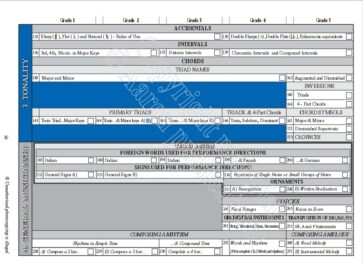
ABRSM and Trinity Graded Checklist: Optional Grade 6 topics are indicated in italics.
Many students find the transition from ABRSM Grade 5 music Theory to Grade 6 challenging. Grade 6 introduces a deeper understanding of harmony, chords, composition and musical structures, so it requires a different approach to learning.
For decades, music teachers and students have agreed on one universal truth: the jump from Grade 5 to Grade 6 music theory is a massive shock to the system.
For students following a syllabus that concentrates mainly on identification and written theory, the transition can feel particularly abrupt. Suddenly, they aren’t just identifying music — they are writing it.
The introduction of harmony, figured bass, and melody construction leaves many students feeling overwhelmed. It is the primary reason why so many musicians stop taking formal theory exams after Grade 5.
But it doesn’t have to be a struggle. The secret to surviving the Grade 6 transition isn’t cramming harder; it is priming the brain early. Here is why the gap is so wide, and how a unique approach to studying can bridge it seamlessly.
Why is the Jump to Grade 6 Theory So Steep?
To understand how to fix the problem, we have to look at how the syllabi (like ABRSM or Trinity College London) shift gears at this level:
- From Passive to Active: Grades 1 to 5 ask you to recognise things (e.g., “What chord is this?”). Grade 6 asks you to create things (e.g., “Harmonise this bassline using correct voice-leading rules”).
- The creativity Block: Grade 6 requires actual music composition. Many students panic when faced with a blank manuscript page and a prompt to compose a complex 16-bar melody from scratch.
- A Brand New Language: Grade 6 introduces figured bass—a historical shorthand system using numbers underneath notes to dictate chords. To a student who has only ever looked at standard notation, this looks like advanced algebra.
- The Chasm in Content: Traditional grade-by-grade workbooks completely compartmentalise information. They keep you inside a strict Grade 5 bubble, meaning you hit a brick wall the moment you pass the exam and buy the next book.
The Secret: Plant the Seeds of Grade 6 in Grade 5
The human brain learns best through familiarity and pattern recognition. If a student sees a complex concept for the first time in Grade 6, panic sets in. But if they have already played around with a simplified version of that concept during Grade 5, their confidence skyrockets.
This is exactly why the All-In-One Music Theory series by Rachel Billings takes a completely different structural approach.
Instead of isolating the grades into rigid, artificial boxes, the All-In-One books seamlessly introduce composition and optional Grade 6 topics right alongside Grade 5 material.
By introducing advanced concepts early in a low-stakes, optional environment, students enjoy several distinct advantages:
Could the VCM Syllabus Help Bridge the Gap?
Another approach worth considering is the VCM Music Theory syllabus, which naturally introduces some of the skills that can otherwise seem unfamiliar when students progress to higher-grade theory.
Alongside the core theory requirements, the VCM syllabus includes compositional elements, giving students opportunities to begin thinking about melody, rhythm and musical construction rather than simply identifying what is already on the page.
It also provides a gentle introduction to the idea behind figured bass. At this stage, students are not expected to master the full figured-bass system used in higher-grade harmony. Instead, they may simply be asked to notice the fourth and circle it when it occurs in a triad. This is a small step, but it begins to make the visual language of figured bass familiar.
Could this kind of early exposure help make the progression towards Grade 5 — and subsequently Grade 6 — feel more continuous?
See the VCM Music Theory syllabus and find out more about the approach.
The important point is not that students should be studying Grade 6 material prematurely. Rather, carefully chosen elements can be introduced at an appropriate level so that concepts such as composition and harmony are not completely new when students encounter them later.
1. Demystifying Chord Inversions
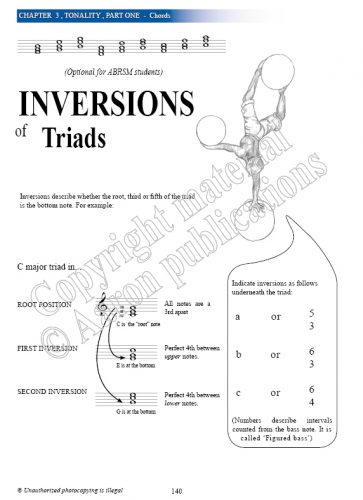
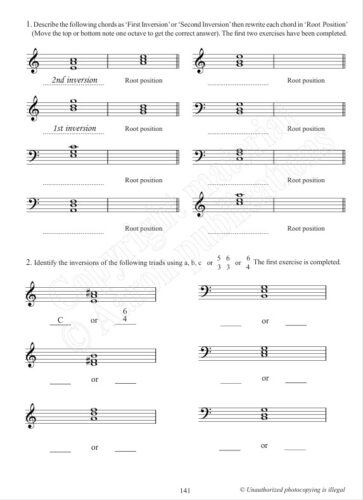
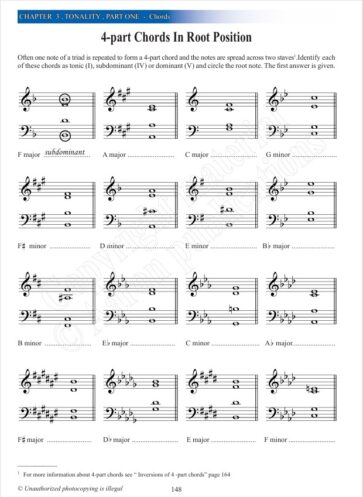
Before you can harmonise a melody in Grade 6, you need to understand how chords move. All-In-One introduces basic triad inversions early on, so by the time students officially need them for Grade 6 harmony exercises, the concept feels like second nature rather than a brand-new obstacle. Root-position four-part chords are also practised before moving on to ‘Inversions of four-part chords’, following a carefully structured, step-by-step progression (See the All-In-One Music Theory Product pages for more sample pages)

2. Gentle Exposure to Figured Bass
Instead of dumping the entire ruleset of 18th-century figured bass onto a student in Grade 6, All-In-One sprinkles introductory concepts into the Grade 5 workflow. Students learn to see the patterns behind the numbers before they are ever graded on them.
3. Accessible, Step-by-Step Composition
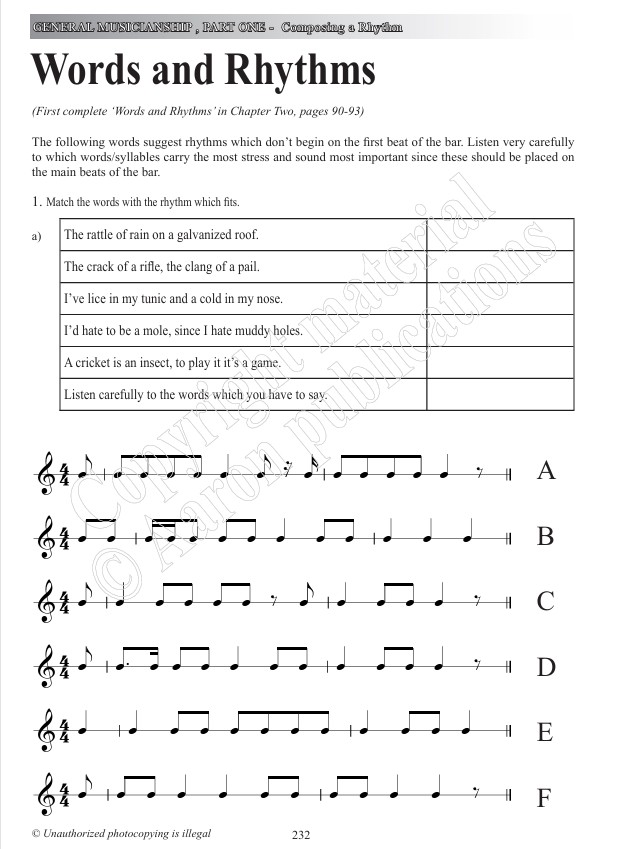
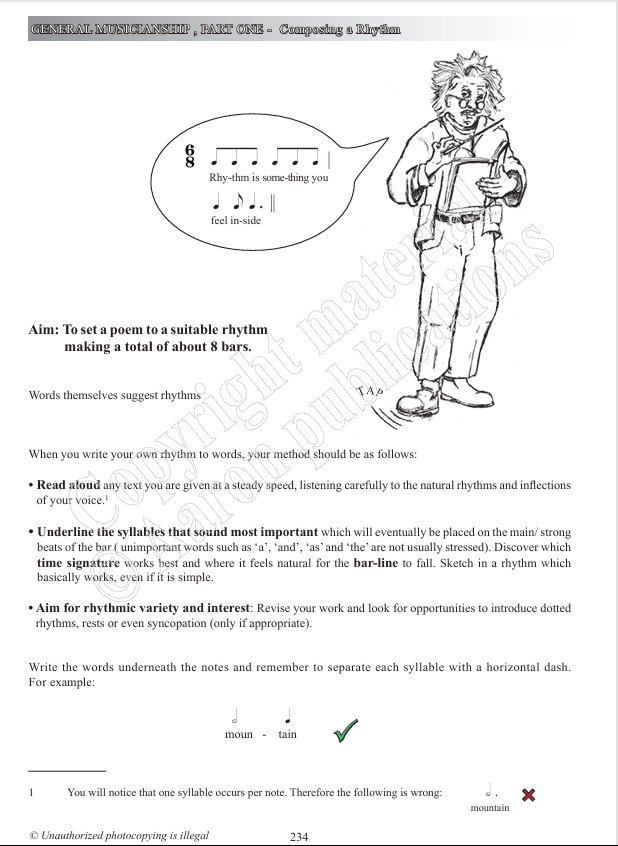
Instead of treating composition like a scary exam requirement at higher grades, All-In-One builds creative writing directly into the foundational lessons. The section on vocal composition builds upon the engaging ‘Words and Rhythm’ papers introduced at a much earlier stage. Students then work through a variety of exercises, first setting a poem to its natural rhythm before progressing to melody. Along the way, they learn how to structure phrases, use passing notes and shape a musical line naturally. This turns higher-grade melody writing into a rewarding creative task rather than a stressful chore. Finally, there is composition for instruments, supported by a lengthy chapter on Orchestral Instruments. Everything follows a logical progression.

3. Better Preparation for Digital vs. Paper Formats
With exam boards like ABRSM moving Grades 1–5 theory completely online, many students are missing out on the physical act of writing music notation by hand. Because Grade 6 remains a traditional paper-based exam focused on composition, using a comprehensive workbook that encourages physical writing alongside advanced concepts prevents a logistical shock later on.
Tips for Teachers and Students Moving to Higher Grades
If you or your students are preparing to take the leap to Grade 6, keep these three strategies in mind:
- Don’t Close the Book Post-Exam: When a student passes Grade 5, don’t immediately pack the materials away. Go back through your All-In-One book and intentionally work through those skipped, optional Grade 6 page and composition pages. It acts as the perfect buffer.
- Focus on the “Why,” Not Just the “What”: When learning intervals and chords in Grade 5, always ask how they sound and how they connect to adjacent chords. This foundational thinking is the bedrock of Grade 6 harmony.
- Use Visual Tools: Higher-level theory requires you to modernise your thinking. Use keyboard diagrams and visual spacing tricks—like the ones mapped out in the All-In-One layout—to make abstract harmonic rules visible.
Final Thoughts: A Continuous Musical Journey
Music theory isn’t a series of disconnected hurdles to jump over one by one; it is a continuous, beautiful language. By choosing study materials that integrate composition and bridge the gaps for you, Grade 6 ceases to be a terrifying barrier and becomes an exciting next step in your musical education.
Explore how our pedagogy builds a bridge to higher-grade success. Check out the All-In-One Music Theory Books Shop to view sample pages of our Grade 1–5 and foundational Grade 6 material.
Frequently Asked Questions
Is Grade 6 music theory harder than Grade 5?
Yes, Grade 6 Music Theory is generally considered a step up from Grade 5. While Grade 5 introduces many of the essential building blocks of harmony and musical understanding, Grade 6 requires students to apply this knowledge in more advanced ways.
Students begin to explore more complex harmony, chords, composition techniques and musical analysis. The transition is manageable, but it helps to have a good understanding of the Grade 5 concepts before moving forward.
What do I need to know before starting Grade 6 Music Theory?
Before starting Grade 6 Music Theory, you should be confident with the key areas covered at Grade 5 level, including key signatures, intervals, scales, chords, cadences and basic harmony.
A strong foundation at Grade 5 will make the new Grade 6 topics much easier to understand. It is also useful to continue developing your ability to analyse music and recognise how composers use harmony and structure.
Can I go straight from Grade 5 to Grade 6 Music Theory?
Yes, you can move directly from Grade 5 to Grade 6 Music Theory, but it is important not to rush the transition.
Grade 6 builds on the knowledge gained at Grade 5, so students who take time to review and strengthen their understanding are usually better prepared. The aim is not just to learn new rules, but to understand how musical ideas work together.
What are the main differences between Grade 5 and Grade 6 ABRSM Theory?
The main difference is that Grade 6 moves beyond learning individual theory concepts and focuses more on applying them. Students develop a deeper understanding of harmony, chord progressions, melody writing and musical structure.
Grade 5 gives you the foundation; Grade 6 begins to explore how composers use these tools creatively when writing music.
If you are preparing for this transition, revisiting your Grade 5 knowledge is one of the best ways to build confidence before beginning Grade 6 music theory.