Can I Use My Trinity Grade 5 Theory Pass to Take ABRSM Grade 6 Practical?
Yes. If you’ve passed Trinity College London Grade 5 Theory, you can use your qualification to enter ABRSM Grade 6, Grade 7 and Grade 8 Practical examinations.
ABRSM explicitly accepts Trinity College London/Trinity Guildhall Grade 5 (or above) in Theory of Music as an alternative qualification for entry to its Grades 6–8 Practical examinations.
So, if you’re moving from Trinity Theory to ABRSM Practical, there’s no need to take another Grade 5 Theory examination.
Many students worry that changing examination boards means starting again. Fortunately, that’s not the case. The knowledge you’ve gained through your theory studies remains valuable, whichever examination board you choose.
Why Is Trinity Grade 5 Theory Accepted?
Although ABRSM and Trinity have different syllabuses and examination styles, both develop the fundamental musical knowledge students need as they progress through the grades.
By Grade 5, students should have a sound understanding of:
- Key signatures and scales
- Time signatures and rhythm
- Intervals and transposition
- Chords and harmony
- Musical terms and signs
- Score reading and analysis
These are the essential building blocks of musicianship and provide the theoretical understanding needed to support more advanced practical performance.
Do I Need to Pass Theory Before Entering Grade 6 Practical?
Before booking an ABRSM Grade 6, 7 or 8 Practical examination, you must have passed Grade 5 or above in Music Theory, Practical Musicianship or an accepted alternative qualification. Trinity College London/Trinity Guildhall Grade 5 (or above) in Theory of Music is one of ABRSM’s accepted alternatives.
The table below shows the theory requirements for ABRSM and Trinity Practical examinations from Grade 6 onwards:
| Practical Grade | ABRSM | Trinity |
|---|---|---|
| Grades 1–5 | No theory qualification required | No theory qualification required |
| Grade 6 | Grade 5 Theory, Practical Musicianship or a recognised equivalent | No theory qualification required |
| Grade 7 | Grade 5 Theory, Practical Musicianship or a recognised equivalentt | No theory qualification required |
| Grade 8 | Grade 5 Theory, Practical Musicianship or a recognised equivalent | No theory qualification required |
If you’ve already achieved Trinity Grade 5 Theory, you have met ABRSM’s theory entry requirement for Grades 6–8 Practical. Trinity itself does not require a theory qualification for its Grade 6–8 Practical examinations.
Why Students Change and Mix Examination Boards
There are many reasons why students choose to mix examination boards. You may change teachers, prefer the practical syllabus of one board but the theory syllabus of another, or simply find that a different examination board better suits your musical goals.
For example, you might:
- Study Trinity Grade 5 Theory
- Take ABRSM Grade 6 Practical
- Return to Trinity for a Performance Certificate
- Continue with whichever board best suits your musical goals
There is no rule that says you must stay with one examining board throughout your musical education. Your choice of examination board can change as your musical journey develops.
Another examination board worth exploring is Victoria College of Music (VCM). VCM offers graded examinations in music, with its own approach to the relationship between theory and practical examinations. For example, Grade IV Theory is required before a Grade 8 Practical certificate can be awarded, although candidates do not have to have taken the preceding practical grades. Find out more about VCM examinations.
Are Trinity and ABRSM Grade 5 Theory Essentially the Same?
Not exactly.
Both qualifications cover the core principles of music theory, but there are differences in the style of questioning and the emphasis placed on certain topics. Trinity also includes a number of additional topics throughout Grades 1–5 that are not included in the ABRSM Grades 1–5 syllabus.
For more detail see my article ABRSM vs Trinity Music Theory – What’s the Difference?
Comprehensive Learning, Not Just Exam Preparation
One of the questions I’m asked most often is:
“Which book do I need if I’m changing from Trinity to ABRSM?”
The answer is usually the same All-In-One Music Theory book you’ve already been using.
Unlike many theory books that are written specifically for one examination board, All-In-One Music Theory was designed to teach music theory as a complete, logical and progressive subject, rather than simply preparing students for a particular exam.
The books include syllabus checklists for the major examination boards—ABRSM, Trinity and Victoria College of Music—so you can easily see which topics are required by each board. Footnote reminders throughout the books also help students identify when particular topics or grades have been completed.
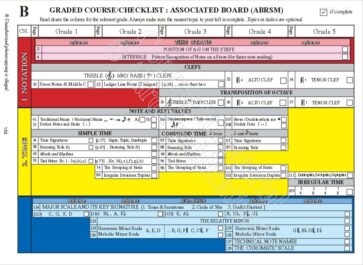
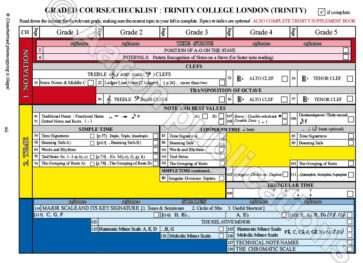
One of the greatest advantages of the series is the flexibility it gives you if you decide to change examination boards. Because the worksheets are designed to be completed independently, you can easily compare syllabuses, identify any additional requirements and continue your studies without having to start a completely new course.
So, if you’ve studied Trinity Theory and later decide to take ABRSM Practical—or vice versa—you can continue using the same comprehensive course while making sure you’ve covered any board-specific requirements.
Whether you’re studying for ABRSM, Trinity or Victoria College of Music, you’re learning music theory—not simply memorising answers for one particular examination.
Frequently Asked Questions
Can I use Trinity Grade 5 Theory for ABRSM Grade 6, 7 or Grade 8?
Yes. ABRSM accepts Trinity College London/Trinity Guildhall Grade 5 (or above) in Theory of Music as an alternative qualification for entry to ABRSM Grades 6, 7 and 8 Practical examinations.
What happens if I change teachers?
Many students change examination boards when they change teachers. Your recognised theory qualification does not need to be repeated simply because you have changed examination boards.
Is Trinity Grade 5 Theory easier than ABRSM?
Neither qualification should simply be regarded as easier. Both assess fundamental musical knowledge, but they use different question styles and place emphasis on different areas of the syllabus.
Do I need different theory books for different examination boards?
No. All-In-One Music Theory is designed to support the syllabuses of ABRSM, Trinity and Victoria College of Music in one comprehensive course. The syllabus checklists make it easy to compare the requirements of each board, so students can continue using the same books even if their examination pathway changes.
Final Thoughts
Changing examination boards doesn’t mean changing everything you’ve already learned.
A pass in Trinity Grade 5 Music Theory can satisfy the ABRSM theory entry requirement for its higher practical grades, allowing you to move forward with confidence.
Whether you’re preparing for Trinity, ABRSM or Victoria College of Music examinations, the key to long-term success is developing a thorough understanding of music theory. All-In-One Music Theory workbooks and Revision booklets have been created with that goal in mind, providing a comprehensive course that supports the major examination boards while giving students the confidence to progress, whatever pathway they choose.