Music Theory Video Tutorials
Music theory becomes far more useful when we understand how it connects with the music we hear, practise and perform.
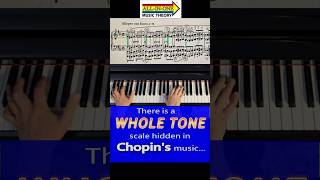
Rachel Billings has created a series of bite-sized music theory video tutorials, including the video above on Chopin’s Étude Op. 25 No. 10 (in octaves). The tutorials explore the practical application of music theory through piano repertoire, showing how harmony, structure, rhythm, phrasing and musical style can help us listen more deeply, practise more effectively and make informed performance choices.
👉 Theory, Musicianship and Performance
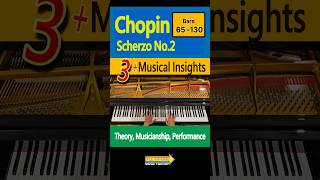
Theory, Musicianship and Performance is a newer series exploring the connections between musical understanding and expressive performance.
 Each short video brings music theory to life through practical musicianship, examining how composers use musical patterns, harmony, structure and other techniques to create expression and meaning.
By analysing piano repertoire, we can understand not only what is written on the page, but why the music works — and how that understanding can influence the way we play it.
👉 A Pianist’s Thoughts — Tips and Techniques
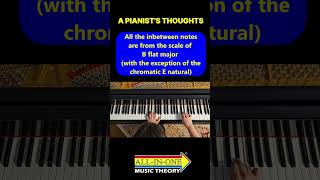
An earlier series, A Pianist’s Thoughts — Tips and Techniques, combines music theory with practical advice on piano playing and practice.
The videos often feature advanced repertoire — pieces Rachel chooses simply because she loves the music. Although some of the repertoire is challenging, the ideas explored are relevant to musicians at every stage.
Recognising the patterns, structures and harmonic ideas beneath the surface can make complicated music feel less daunting, helping us understand it more quickly, practise with greater purpose and approach difficult repertoire with greater confidence.
These videos aim to inspire as well as inform, showing that music theory is not simply a collection of rules, but a practical tool for understanding, learning and performing music.
Discover how an understanding of music theory can help bring the music to life.
From Music Theory to Musical Understanding
Rachel’s Music Theory Video Tutorials explore the musical ideas that naturally emerge while learning and performing the pieces she loves. The aim is not simply to analyse the music, but to show how music theory can help us hear, understand, learn and perform it more effectively.
The repertoire is chosen from the pieces Rachel enjoys playing — and quite often, that means Chopin!
As Rachel learns a new piece, she often discovers familiar musical ideas appearing again and again: sequences, chords, cadences, modulation, harmonic progressions, rhythmic patterns and structures. These are the same concepts explored in her All-In-One Music Theory books.
The important step is learning to recognise these ideas when they occur in real music.
Combined with aural training, music theory can help students recognise musical patterns not only on the page, but also by ear, turning theoretical knowledge into practical musicianship.
Recognising the underlying musical ideas can help students:
- understand the structure and form of a piece and how these influence interpretation
- hear harmonic movement and understand how chords create tension, direction and resolution
- recognise rhythmic and melodic patterns
- make more informed musical and interpretive decisions
- memorise music more securely
- practise more effectively
In this way, music theory becomes much more than something to learn for an exam. It becomes part of the process of learning the music itself.
Advanced music is often built from simple ideas.
The real skill is learning to recognise those ideas when they appear — and to hear how composers transform them into music that is expressive, individual and meaningful.
That is where music theory becomes musical understanding.